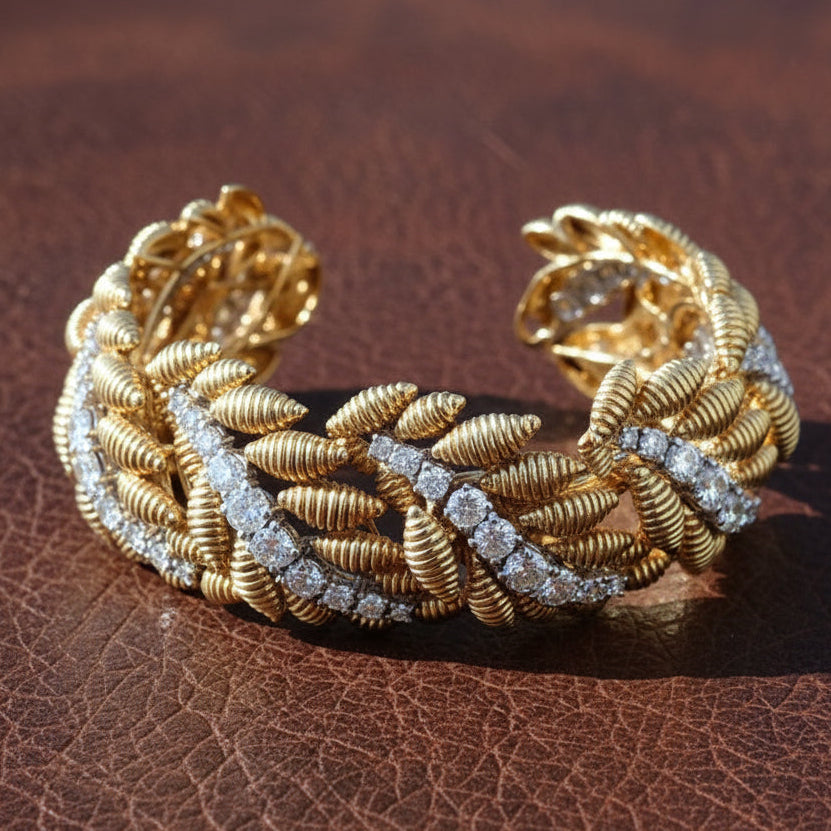
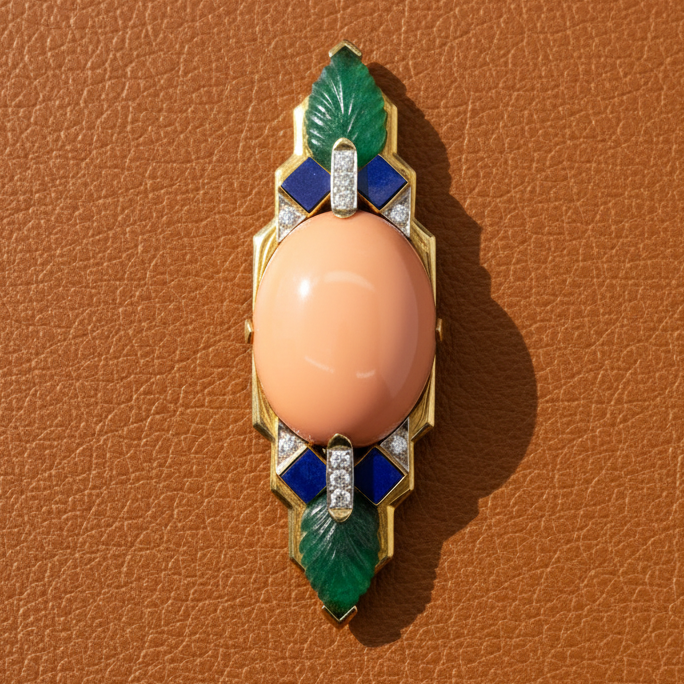
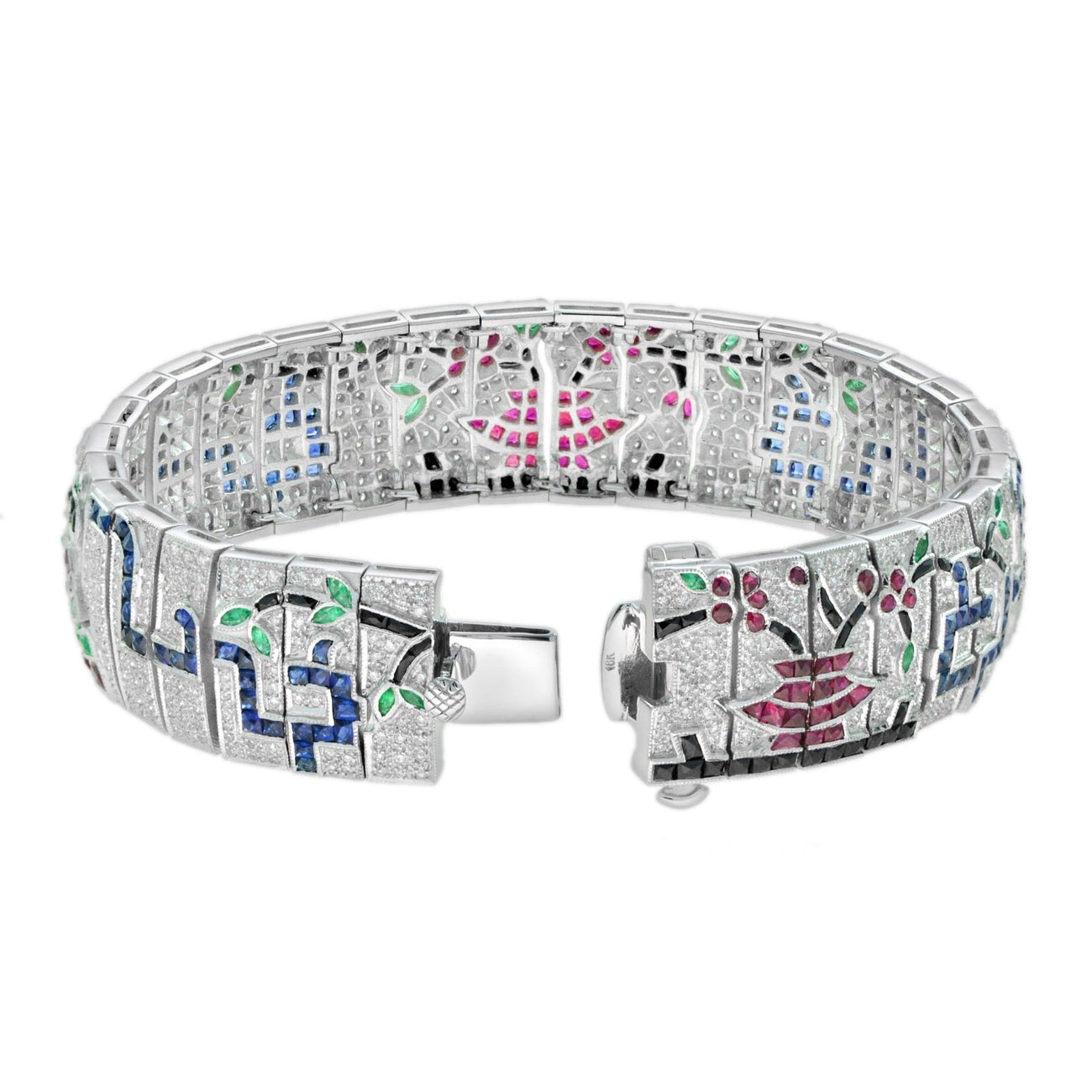
Designer

1980's
Estate Modern Designer Rough Cut Aquamarine, Silver & 18kt Yellow Gold Set
$4,590.00Enquire →
Estate Jewelry with a past worth keeping
A privately held collection of signed period pieces — from Belle Époque diamonds to mid-century Cartier and Van Cleef — each one catalogued, authenticated, and quietly extraordinary.
Newest Estate Jewelry Additions

Diamond · Round Brilliant Cut · 6.00 ctw


Diamond · Round Brilliant Cut · 3.35 ctw


Ethiopian Opal · Cabochon · 8.36 ct


Tourmaline · Emerald Cut · 17.18 ct
What Is Estate Jewelry?
Estate jewelry is, quite simply, jewelry that has lived a life before yours. The word estate refers to ownership rather than to a particular age — a signed Art Deco brooch, a Belle Époque diamond rivière, a mid-century Cartier ring are all estate jewelry, whether they left the workshop two hundred years ago or two seasons ago. What they share is not a date on a certificate but a history: each piece has been owned and worn before, and very often made to a standard of craftsmanship that is difficult, and sometimes impossible, to reproduce today.
At VERANE, the estate jewelry we acquire sits at the rarer end of that definition. We deal in signed and period pieces — jewels from recognised houses and master workshops, created in eras when diamonds were cut by eye to catch candlelight, when settings were built and engraved by hand, and when a single brooch might occupy an artisan for weeks. To wear estate jewelry of this calibre is to wear something the world is no longer set up to make.
It is also, increasingly, the considered choice. A fine estate jewel is inherently sustainable — it already exists, mined and made generations ago, and asks nothing new of the earth. It is very often one of a kind, so it will never meet itself across a room. And because the price of a new piece is weighted heavily toward retail overhead rather than the jewel itself, estate jewelry frequently offers more gemstone, more gold, and more artistry for the same outlay.
You will sometimes hear estate jewelry spoken of alongside vintage and antique, and the distinction is worth knowing. Antique generally means a hundred years or more; vintage, roughly twenty to a hundred; estate, any jewel that has simply been owned before. A piece can be all three at once. What we look for, above the label, is integrity — a jewel that was beautifully conceived, honestly made, and has survived with its character intact.
None of this matters, however, without certainty. Every estate piece we offer is examined by our own gemmologists, researched to its origin, and accompanied by a full provenance dossier and lifetime authenticity guarantee. That is the quiet promise behind estate jewelry done properly: not merely a beautiful object with a past, but a documented, irreplaceable jewel you can wear, pass on, and trust completely.
A century of quiet connoisseurship
Founded above a Mayfair arcade in 1921, Verane has spent a hundred years doing one thing with obsessive care: finding the rare, the signed, and the genuinely irreplaceable, and placing it in the right hands.
We do not deal in volume. Every piece passes through our own gemmologists, is researched to its origin, and arrives with the documentation a serious collection deserves.
Collect by Period
Estate Jewelry, Answered
The questions we are most often asked about collecting estate jewelry, answered plainly by the people who handle it every day.
Estate jewelry is fine jewelry that has had a previous owner. The term describes ownership, not age — a jewel can be a hundred years old or a single season old and still be ‘estate.’ In practice it has come to mean pre-owned pieces of genuine quality: signed, period, or simply beautifully made, offered for a second life rather than sold new from a brand’s current line. Everything in the VERANE vitrine is estate jewelry in this sense — acquired from private collections and estates, then authenticated, researched, and documented before it is offered to you.
Not quite, though the words overlap. Antique jewelry is generally a hundred years old or more. Vintage usually means roughly twenty to a hundred years old. Estate simply means previously owned, at any age. So an antique Edwardian tiara and a vintage 1970s Cartier ring are both estate jewelry — but a barely-worn contemporary piece sold on is estate too, without being vintage or antique. When we describe a piece at VERANE we are precise about its period and maker, so you always know exactly what you are looking at.
It can be any quality — because ‘estate’ only tells you a piece was owned before, not how well it was made. In reality, most jewelry offered as estate is good, for a simple reason: people rarely go to the trouble of reselling jewelry that was not fine to begin with. The pieces that survive and circulate tend to be the ones worth keeping. That said, the market is uneven, which is why curation matters. We accept only a small fraction of what we are shown, and every estate jewel we list is condition-graded and guaranteed authentic for life.
Through documentation and expertise, never assumption. Each estate jewel is examined in-house, tested for its metals and stones, and researched to establish its maker, period, and any signatures or hallmarks. Significant pieces carry independent certification from laboratories such as GIA or SSEF, and every acquisition arrives with a VERANE provenance dossier and a lifetime authenticity guarantee. If a piece cannot be authenticated to our satisfaction, we do not offer it. With estate jewelry, the jewel and its paperwork are inseparable.
Fine estate jewelry tends to hold value better than newly retailed jewelry, and the best pieces appreciate. Much of the price of a new jewel covers a brand’s overhead — value that evaporates the moment you leave the boutique. An estate piece has already shed that premium, so what you pay sits much closer to the intrinsic worth of the gold, the gems, and the workmanship. Signed pieces from sought-after houses and periods, in particular, are governed by scarcity: they are no longer made, and that tends to support, and often lift, their value over time.
By the jewel itself, not by a brand’s list price. We weigh the quality and weight of the gemstones, the precious-metal content, the maker and period, the rarity of the design, and condition — then position the piece against recent auction and private-sale results for comparable jewels. Because estate jewelry carries no boutique mark-up, this almost always means more stone and more craftsmanship for a given figure than a newly made equivalent.
Yes, and only in the best sense. Every estate jewel is professionally cleaned, examined, and restored where needed before it is offered, so it reaches you immaculate. As for the old superstition that pre-owned jewelry carries ‘bad luck’ — it is just that. Most fine jewelry is sold simply because tastes change or a piece is inherited by someone it does not suit. We see these jewels not as second-hand but as continued, with their stories intact rather than erased.
In most cases, yes — and we will advise honestly on what a particular piece can take. Rings can usually be resized, clasps renewed, and stones resecured by a specialist bench, all while preserving the jewel’s character. With antique and signed pieces we lean toward sympathetic conservation rather than modernisation, so the integrity and value of the original are protected. If a piece is too fragile to alter, we will tell you, and suggest how best to wear it instead.
Three reasons, usually. Value — without a boutique premium, your outlay buys more jewel. Rarity — estate pieces are frequently one of a kind, made in eras and by hands that no longer exist. And conscience — an estate jewel already exists, asking nothing new of the earth, which makes it the genuinely sustainable choice in fine jewelry. Beyond all of that is the quiet pleasure of provenance: a piece that had a life before yours, and will have one after.
See it in the hand
A piece at this level is felt, not scrolled. Join us privately in Mayfair or New York — or arrange a fully insured viewing wherever you are in the world.
Notes from the Vault
How a St. Petersburg workshop became Goldsmith to the Tsars, was seized by the Revolution in 1918, and...
Read → 22 Jul 2026 · Buyer GuideA collector's guide to authenticating signed Cartier, Van Cleef & Arpels, and Tiffany & Co. jewelry — what...
Read → 21 Jul 2026 · Craft & TechniqueThe engine-turned engraving beneath translucent enamel that gave Fabergé's Imperial Eggs their glow — and the small number...
Read →